
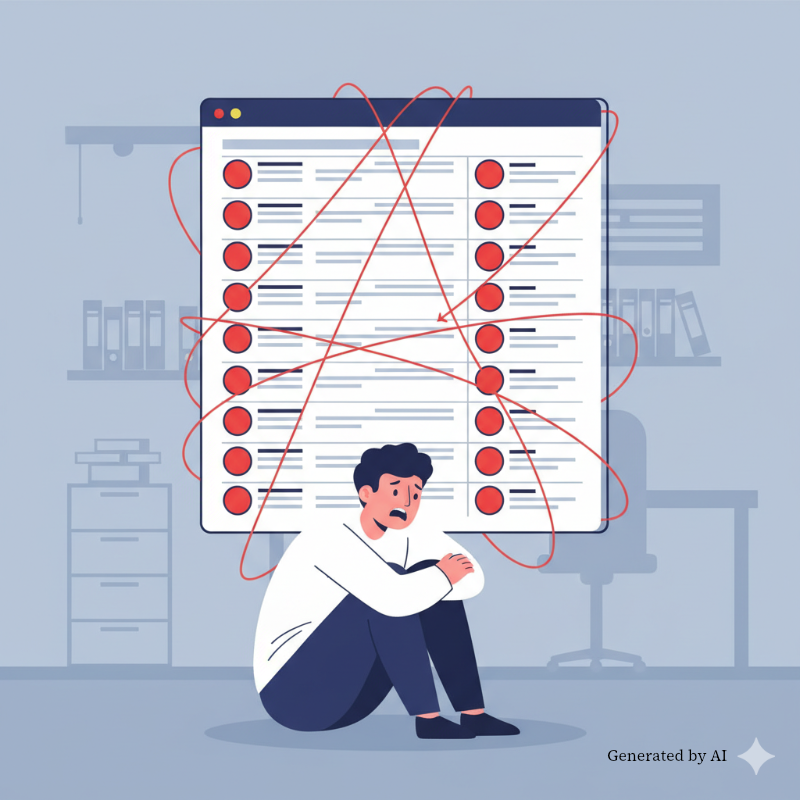
As a rule, I like to get things right the first time.
This is partly because patience is not one of my gifts. But mostly, I don’t like the feeling of miss = fail.
I’m certainly not alone. Who among us hasn’t done something that didn’t work and then had to face unpleasant consequences?
Fear of failure is another one of those “helpful” survival mechanisms your brain uses when it senses danger. In this case, it’s already decided past experience predicts future results, and so it’s dissuading you from even trying.
Deciding not to do something, however, ensures you don’t face any consequences, including the good ones. You’re also cutting off the opportunity to learn something new, even if it’s simply learning what not to do in the future.
When you don’t learn, you don’t grow, and that’s not a recipe for success amid the AI upskilling that’s coming your way. So Step 3 of the Org AI Literacy framework is to develop a culture of learning.
The red badge of discouragement
In school, we have letter grades that signal whether we’re passing or failing. As we get older, we transfer this model to the world of work through performance ratings and the like. It’s not framed as Pass or Fail, but because that’s what we learned in school, it tends to stick with us.
It’s the same with the green-yellow-red system that’s used in status tracking. Green = everything on track; yellow = something’s at risk of going sideways; and red = yeah, this is definitely going off the rails.
For a temperature check on your culture, observe the response when a project goes red. Often, it’ll be one of our trusty survival responses:
- Fight: Throw anyone, everyone, and everything else under the bus. They’re to blame, not me.
- Flight: Seek a loophole to keep the status in yellow or cancel the project altogether, regardless of whether a cancellation is warranted.
- Freeze: Report a green status until the very last minute when the red status can’t be hidden any longer.
- Fawn: Falling on the sword so no one else has to. This is one managers use, with the intent of shielding their team.
When folks are falling over themselves not to have their name attached to a red status, it’s because they’ve seen it become a punitive badge of shame. It creates an automatic association between that person and something going off the rails, which can ding their reputation, hurt their career growth, or even lead to a PIP or dismissal.
You’ll see other signals, too, like people being afraid to speak up in meetings, or overemphasis on getting consensus or approval for every little thing. They’re experiencing a general lack of psychological safety, and their self-preservation instinct kicks in.
It also really, really slows things down, and it can lead to decisions that focus on what’s safe instead of what’s right. For example, only pursuing the sure bets, and not the big ideas that are more likely to go awry.
This isn’t an environment that nurtures innovation. Yet that’s exactly what you need in order to adopt AI meaningfully.
It’s a learning opportunity, not a Fail
In the red-status scenario, there’s another possible response, and it’s the one you want your culture to reflect: Accepting the red as a normal part of work, owning the reasons why, and course-correcting based on the lessons learned.
No one’s figured out the secret sauce with AI, and so the only way to know what works for your team is to test it. By design, you’ll go through a lot of trial and error, and the error part needs to be an accepted part of the process. When it happens, the next steps are figuring out why it stumbled, hypothesizing how to avoid that, and then trying again.
Managers and leaders, changes start at the top. Your job is to coach your teams through how to diagnose root causes, encourage them to iterate, and provide space for them to do it. In performance reviews, you’re looking for willingness to experiment and learn, not whether the experiment was a success.
Design your experiments with fast iteration in mind so you can continuously learn and adapt. Lessons learned 6 months ago might not apply anymore when the technology has changed and now enables whatever it was that didn’t work before.
Although experimentation is fun and gets the creative juices flowing, you’ll eventually need to consolidate and scale the solutions that work best. This, too, will involve experimentation, which might result in some expensive lesson-learning as the scope grows. Assume it will happen and bake it in to your budget.
Your culture of learning extends beyond AI experimentation, too. If the goal you set in Q1 turns out to be the wrong direction in Q2 because the situation changed, then making a pivot should be the expected course of action. Sticking with it purely for the sake of delivery is a waste of resources.
Guardrails and pitfalls
AI is getting the blame for a lot of Very Bad Things happening in workplaces, and one of the reasons is because it’s amplifying the dysfunctions that were already there. Your culture of learning needs to account for some key pitfalls.
This isn’t the Wild West
Freedom to experiment isn’t a license for free-for-all. Experiments should have a purpose and objective that matches up with your business. Don’t slow everything down with long approval chains or intensive tracking systems, but do have enough structure to keep everyone moving in the same direction. (See Org AI Literacy: Step 2 – Clarity in the destination)
Measure everything
It’ll be hard to know what to scale if you can’t quantify the impact. Time savings is an obvious one, but there are many others. A few I can think of off the top of my head: number of manual touchpoints, quality of AI outputs, token expenditure, tech debt elimination.
Accountability
Don’t use “culture of learning” as an excuse to stop holding people accountable for meeting their commitments. That’ll be a temptation, because accountability and punishment can feel like the same thing to the person on the receiving end. Drive accountability from the “what did we learn from this, and what are we doing differently because of it?” perspective, and don’t accept surface-level Fight or Flight responses. Constructively, of course, and not accusingly.
What’s outside your control
Unfortunately, it’s possible corporate culture might supersede or counteract the psychological safety you’re aiming for at a team level. There’s not much you can do about this, and even your leaders might not have much sway. My best advice is to put it in perspective. The big bosses are gonna do what big bosses do, and that’ll happen no matter how “safe” you play the game.
In the meantime, you’re future-proofing yourself by learning everything you can.
All opinions here are my own. All text is my own, too, including the em dashes. I welcome constructive comments and discussion on LinkedIn and Bluesky.