
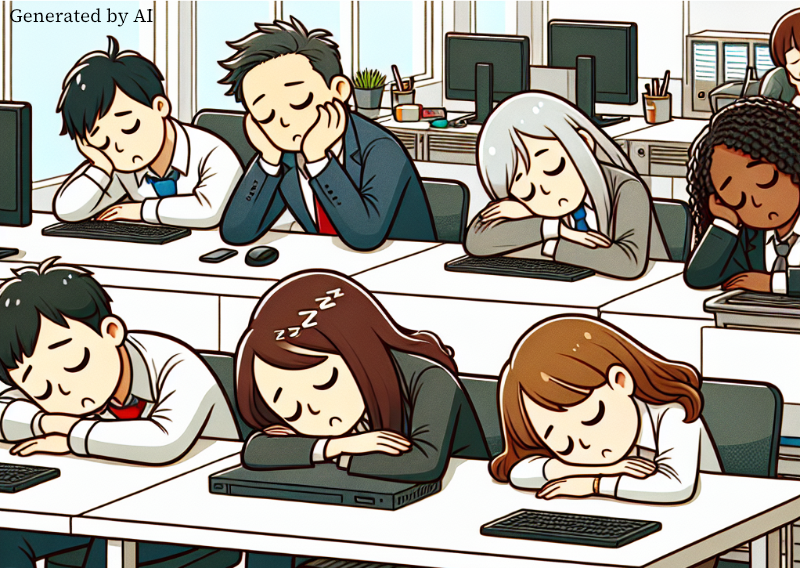
I know this will come as a surprise to anyone who’s gone to work in an office lately, but worker dissatisfaction is pervasive. The craptastic job market has made this worse, and folks are job hugging in misery, unable to leave and unable to move on.
At the same time, leaders and managers have been tasked with Transform! Transform! Transform! Which, as you might surmise, isn’t always well-received.
The fatigue is justified. In what seemed like the blink of an eye, the entire world went right to Ludicrous Speed and hasn’t slowed down. Changes are coming so fast and in so many forms that the overwhelm and instability are paralyzing.
Ludicrous Speed is a relatively recent phenomenon, and I’ll leave it to people smarter than me to parse what started it. The upshot for work purposes is that it’s become impossible to follow the conventional advice on how to make transformative changes. Once upon a time, the gold standard was a highly structured process with a clear Future State in mind and a definitive start and end date, often over the course of a year or more. The idea was that if you invest in bringing people along step by step, you’ll overcome all the challenges and the change will be successfully integrated.
So, over time, leaders have been taught to focus on socializing a Grand Vision and its benefits in order to overcome resistance. Employees are taught to wait for someone to tell them what to do and why. People managers patiently lead their teams through the change curve. And the poor change managers have been taught to set up a plan more detailed than an urban beach assault to get people from here to there.
But as we’ve all learned the hard way, the structured method goes to hell in a handbasket when you’re trying to implement five transformations in parallel while also needing to pivot every couple months because something fundamental — like, say, the entire technology — shifts unpredictably.
Embrace the chaos
The experts call this ungovernable change. You might know it as chaos.
Those same experts recommend treating chaos like a feature, not a bug. Your emphasis should therefore be on cultivating readiness for constant and continuous change, and not necessarily ginning up enthusiasm about it. In other words, set the cultural expectation that change is just another Thing We Do, same as any other business practice.
What I like about this approach is we can stop chasing after time-consuming trappings of the traditional process: the artifacts, the presentations, the just-give-it-a-try cajoling. The faster pace encourages more experimentation and iteration, which is the innovative mindset companies are trying to encourage.
Where I see risk, though, is in rolling this out across a team that’s already smack in the middle of extreme change fatigue. Picture if you will, a town hall full of stony stares when a leader says dealing with chaos is now a core part of your job. You can pretty much expect it will be interpreted as: Suck it up, buttercup. We’re taking a pass on figuring it out, and it’s now all on you.
Once this sentiment gets entrenched, it’s really tough to undo. Your best bet for re-engagement is to give the team more control over what happens next, while also providing enough structure that they don’t feel rudderless or abandoned. Readiness efforts should include all the traditional tactics — shared vision, upskilling, championing what “good” looks like, collaboration on redefining processes, etc. — but aimed at empowering the team to handle change themselves rather than waiting for a leader to direct them.
Taming the Wild West
Folks can be completely ready and capable of dealing with change and still derail it because they don’t agree with it. To deter this, you’ll need guardrails for accountability.
Pull out those role descriptions, because that’s where it starts. Codify “change is a Thing We Do” in each one, regardless of function. While you’re there, codify whatever changes you’re making as a result of AI integration. You also might need to adjust legacy reward and promotion systems that are based on project completion. This keeps you from penalizing someone because they had to drop work or pivot midstream. Then, once that’s all in place, you’ve got to hold each individual accountable to the new standards, usually via people managers and performance coaching. If this is a new concept for your team, you’ll have to do some readiness work here, too.
Another concept to emphasize with the team is: Chaos ≠ Wild West. Your accountability systems should make sure folks can’t use “welp, that’s just continuous change for you” as an excuse for going rogue or slacking on delivery. Set short-range objectives to keep everyone moving in the same direction, and try not to be hand-wavy with them (“we’ll improve the product!”). The more concrete you can be, the easier it will be to monitor progress and to know when it’s time to pivot. The journey will be winding instead of linear, so don’t let sunk-cost fallacy keep you on the wrong path.
I freely admit, I need to eat my own dog food here. It’s been awhile since my team last rolled out this sort of change readiness as part of our operations work, and our organization has gone through some fundamental pivots of late. I’m sponsoring the org health goal this year, and I expect to follow this approach as part of that.
Will Ludicrous Speed ever stop? Hard to tell. But I’d sure like to be ready if it doesn’t.
All opinions here are my own. All text is my own, too, including the em dashes. I welcome constructive comments and discussion on LinkedIn and Bluesky.