
One of my many dreams when I was little was to become an astronaut.
At some point, I realized math and physical fitness were involved and decided my path lay elsewhere. But I’ve always had a strong interest in all things space.
When space stuff goes well, it goes really, really well, inspiring us to keep pushing the limits of possibility.
When space stuff goes wrong, it goes really, really wrong.
I was in school when Challenger exploded, and my teacher was called into the hallway and came back crying. Later on, we watched the endless replays on TV and the infamous “go at throttle up” final words. I was working in a newsroom during the Columbia disaster and saw all that coverage in great detail, too. You don’t forget these things.
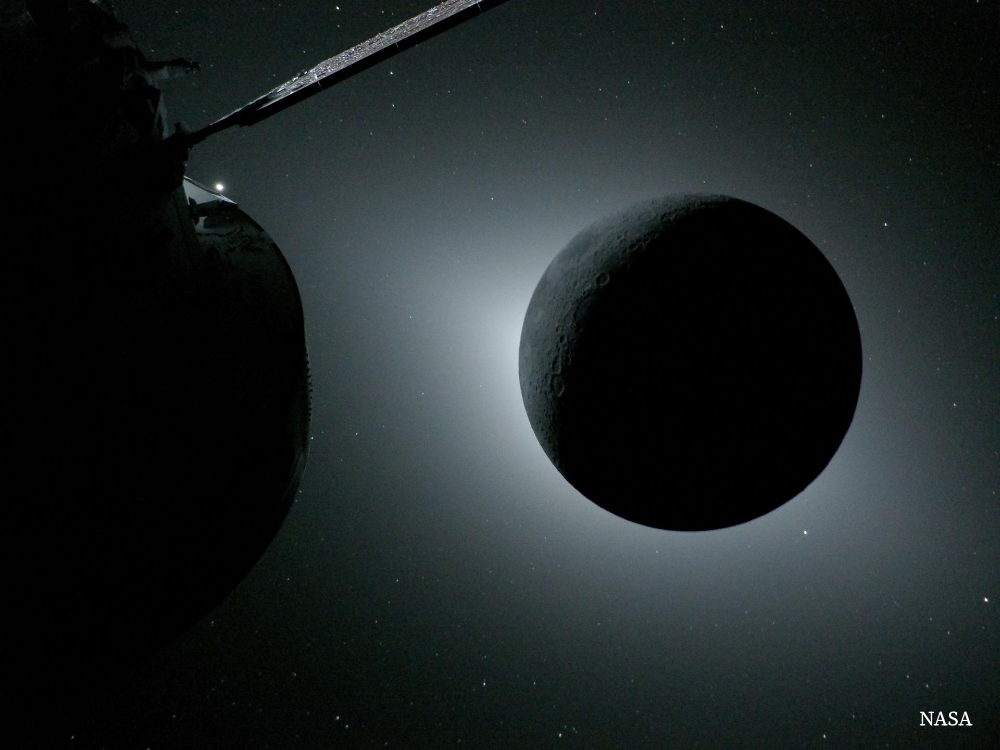
So I was keeping an eye on the Artemis II mission to the Moon with equal parts awe and trepidation. If you haven’t seen the photos, go take a look. It had been far too long since we last sent humans to visit our orbiting companion.
Every mission has its risks, but this one had a particularly concerning one: The protective heat shield on the Orion crew module failed at the very end of the Artemis I test. The spacecraft didn’t break up like Columbia, but it didn’t bode well for Artemis II, which would be crewed. The rocket scientists made some changes to the heat shield, but they also decided to adjust the next mission’s descent trajectory so it wouldn’t generate as much heat. (Here’s a good recap of the challenge.) There was no Artemis 1.5 to test it. This would succeed or fail in real time.
Then, last Friday, the four astronauts made a picture-perfect descent and splashdown in the Pacific, the ideal end to this historic mission. I watched the live NASA coverage, which was breathtaking.

The success of Artemis II was a badly needed reminder of what humans can accomplish when we embrace the unknown and literally uplift each other. I can’t say it any better than NASA Associate Administrator Amit Kshatriya:
“This moment belongs to the thousands of people across fourteen countries who built, tested, and trusted this vehicle. … (Astronauts) Reid, Victor, Christina, and Jeremy carried the hopes of this world farther than humans have traveled in more than half a century. Fifty‑three years ago, humanity left the Moon. This time, we returned to stay. The future is ours to win.”
Thousands of people. Fourteen countries. Years of planning and work.
Think of how many systems needed to work in harmony to make this happen — technical, mechanical, logistical, etc. And all the orchestration to hold everything together. And all the problems that needed to be solved on the fly, ranging from the heat-shield issue to, unfortunately, a broken toilet. It puts a sobering perspective on the day-to-day systems I deal with, which can only aspire to this scale and level of success.
It’s not lost on me that the crew named their spacecraft Integrity. It’s been painful to watch the long-running struggle of the U.S. space program and the more recent dismantling of the scientific communities in general. The Artemis program itself has been at risk multiple times. Yet thousands of people stayed committed to the the mission, and four people who willingly signed up to go farther than any humans have gone before put their trust in them, brave enough to hover 400,000 feet above the earth knowing they were about to plummet into the ocean on an untested path.
Humans are pretty cool. And the future is indeed ours to win.
All opinions here are my own. All text is my own, too, including the em dashes. I welcome constructive comments and discussion on LinkedIn and Bluesky.